
Working in Canada on a working holiday visa? Then you’ve been paying Canadian tax, and there’s a good chance some of it is coming back to you.
This guide explains, in plain English, whether you need to file a Canadian tax return, how your residency status works, how much tax you pay in 2026, and how to claim your refund before (or after) you leave.
Updated October 2026: key facts for the 2026 tax year
- The Canadian tax year runs from 1 January to 31 December.
- Your 2026 return is due by 30 April 2027.
- Federal tax in 2026 is 14% on taxable income up to $58,523, plus provincial tax.
- The federal basic personal amount for 2026 is $16,452. Newcomers get a share of it based on the days they were resident.
- You can file online (NETFILE) if you have a SIN.
- The GST/HST credit is now called the Canada Groceries and Essentials Benefit. Newcomers apply with form RC151.


Do I need to file a Canadian tax return?
If you worked in Canada and had tax taken off your pay, you should file a return. It’s the only way to get back any tax you overpaid.
You must file if you owe tax to the Canada Revenue Agency (CRA). Filing also keeps your record with the CRA clean.
When you file, you report all the income you earned in the tax year. Your employer gives you a T4 slip showing your pay and what was deducted.
There’s another reason to file: you can only get benefits like the Canada Groceries and Essentials Benefit (see below) if you file.
Am I a resident or a non-resident for tax purposes?
This is the part most working holiday makers get wrong, and it matters, because it decides which credits you can claim.
Your tax residency is not the same as your visa. The CRA looks at your ties to Canada, based on the facts of your situation.
Part-year resident (newcomer)
If you come to Canada and set up significant residential ties, the CRA usually treats you as a resident from the day you arrived. Significant ties include:
- A home in Canada, such as an apartment or room you rent on a lease
- A spouse or common-law partner in Canada
- Dependants in Canada
Secondary ties also count, such as a Canadian bank account, credit card, driver’s licence or provincial health card.
Many people on a one or two-year working holiday who rent a place and work here fall into this group. You’re taxed like a Canadian resident on your worldwide income from the day you arrived, and you claim credits for that part of the year.
Non-resident
You’re a non-resident if you don’t set up significant residential ties in Canada. For example, you keep your home overseas and only come over for a short seasonal job.
Non-residents pay Canadian tax only on certain Canadian income, such as employment income earned in Canada, and they can claim fewer credits.
What about the 183-day rule?
This one confuses a lot of people. Staying in Canada for less than 183 days does not automatically make you a non-resident. If you have significant ties, you can be a resident even after a few months.
The 183-day rule works the other way: if you have no significant ties but spend 183 days or more in Canada in a year, you can be deemed a resident for the whole year.
Not sure? Ask the CRA
If your situation isn’t clear, you can ask the CRA for its opinion using Form NR74, Determination of Residency Status (entering Canada). The CRA also has a clear page on determining your residency status.
Filing under the wrong status can mean claiming credits you’re not entitled to (and paying them back later), or missing out on money you’re owed.
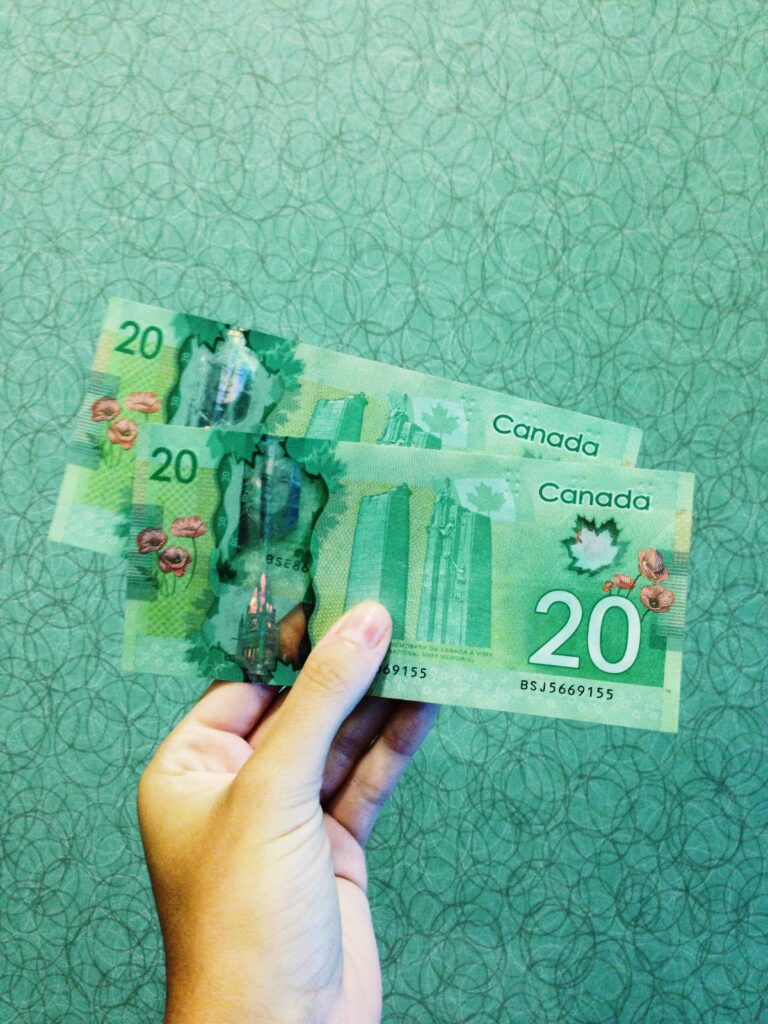
How much tax will I pay in Canada in 2026?
You pay federal tax plus provincial tax for the province you lived in on 31 December (or, for non-residents, generally the province where you earned the income).
The 2026 federal rates are:
- 14% on taxable income up to $58,523
- 20.5% on the portion from $58,523 to $117,045
- Higher rates above that (26%, 29% and 33%)
The lowest provincial rates in the two places most working holiday makers live are:
- British Columbia: 5.6% on taxable income up to $50,363
- Ontario: 5.05% on taxable income up to $53,891
You can see every bracket on the CRA’s 2026 tax rates page.
The basic personal amount (your “tax-free” amount)
For 2026 the federal basic personal amount is $16,452. Strictly speaking it isn’t a tax-free band. It’s a non-refundable credit worth 14% of $16,452, which cancels out the federal tax on roughly that much income. Provinces have their own version too.
Newcomers don’t get the full amount. You get a share based on the number of days you were resident in Canada that year. For example, if you became resident on 1 July 2026 (184 days), your federal basic personal amount would be about 184/365 of $16,452, roughly $8,290.
That’s why many working holiday makers who arrive mid-year and have tax taken off their pay at full-year rates end up getting a refund.
What is the 90% rule in Canada?
The 90% rule is about income you earned outside Canada, and how it works depends on your residency status.
If you’re a part-year resident
You claim credits like the basic personal amount for the part of the year you were resident, prorated by days. You can only claim the rest of the full-year amount if your Canadian income for the part of the year when you were not resident was 90% or more of your net world income for that period.
For example, say you worked in a bar at home from January to June 2026, then moved to Canada and worked from August to December. You can claim a prorated basic personal amount for your time as a resident. Because your income before you arrived wasn’t Canadian, you can’t top it up to the full-year amount. You don’t lose the credits, you just get a smaller share.
If you’re a non-resident
Here the rule is stricter. You can generally only claim most personal credits, including the basic personal amount, if at least 90% of your net world income for the year was earned in Canada. If not, most of those credits are denied.
The CRA’s guide to completing your return as a newcomer explains how to work out the numbers.
How do I know if I’m due a Canadian tax refund?
You might be due money back if too much was deducted from your pay. Refunds usually come from three places:
- Income tax: often because tax was deducted as if you’d earn a full year’s pay, but you only worked part of the year.
- Canada Pension Plan (CPP) contributions: for example, if you worked for more than one employer and together they deducted more than the yearly maximum.
- Employment Insurance (EI) premiums: the same idea, if more than the yearly maximum was deducted.
To get a rough idea of what you might get back, most CRA-certified tax software shows an estimate of your refund as you fill in your return, before you file anything.


Don’t miss the Canada Groceries and Essentials Benefit (formerly the GST/HST credit)
The GST/HST credit, a tax-free quarterly payment for people on low and modest incomes, was renamed the Canada Groceries and Essentials Benefit in July 2026. If you’re a resident for tax purposes, you may qualify.
For the year you become a resident, you apply using Form RC151. After that, you have to file a tax return every year to keep getting it. Some provinces also pay their own credits through the tax system, so check what applies where you live.
When is the deadline to file my Canadian tax return?
For the 2026 tax year, the deadline is 30 April 2027. You can file as soon as you have your T4 slips. Employers have to send them by the end of February.
If you’re due a refund and you miss the deadline, there’s no late-filing penalty, but you’ll wait longer for your money and any benefits.
If you owe tax and file late, the CRA charges a late-filing penalty of 5% of the balance owing plus 1% for each full month late (up to 12 months), plus interest. So if you think you might owe money, file on time.
How do I file my Canadian tax return?
File it yourself online
If you have a Social Insurance Number (SIN), you can file online through NETFILE using CRA-certified tax software, and some certified software is free. Without a SIN you can’t file online and have to file on paper.
Not every program handles part-year resident or non-resident returns well, so check before you start, and have your arrival date and your income from before you arrived ready.
Leaving Canada before you file?
Lots of working holiday makers leave Canada before tax season. Before you go:
- Keep copies of your payslips and make sure each employer has your overseas address or email for your T4.
- Register for CRA My Account so you can see your slips, track your return and update your address.
- Keep your Canadian bank account open until your refund arrives, or set up direct deposit, so you’re not waiting for a cheque in the post.
- If you were a resident, the year you leave is usually a part-year return too.

Who can help me with my Canada tax refund?
If your return is simple and you have a SIN, you can file it yourself. CRA-certified tax software (several options are free) lets you file online through NETFILE, and it walks you through the residency questions.
If your situation is more complicated, for example you have already left Canada, you earned income in more than one country, or you are not sure whether you count as a resident, a registered tax preparer or accountant who works with newcomers and non-residents can file for you. They charge a fee, so compare quotes first.
- Working holiday in Canada: the complete guide (all our Canada posts in one place)
- How to stay in Canada after IEC
- Best bank in Canada for newcomers
- Best travel jobs
Planning your Canadian tax return?
Steve and Sabina
Planning your trip? Pin this guide to your Pinterest board for later.

Some links are affiliate links. If you use them we may earn a small commission at no extra cost to you. Rules, fees and rates change; always check the official government website before you apply.
This guide is general information, not tax advice. If your situation is complicated, talk to the CRA or a qualified tax professional.